
Why Indians Still Prefer Maggi Over Yippee — Even at a Higher Price
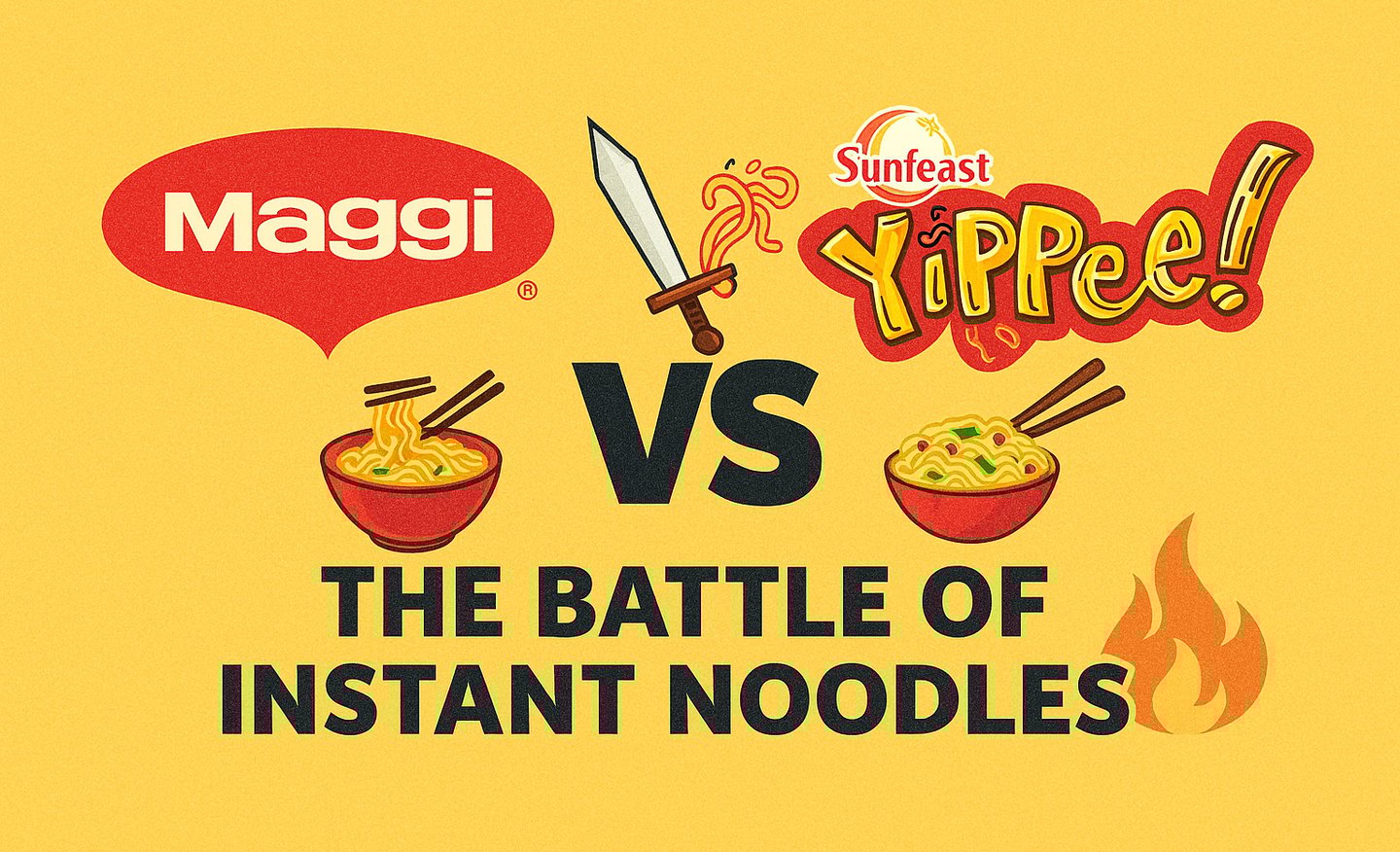
Maggi and Sunfeast Yippee are the two dominant players in India’s instant noodle market. On paper, Yippee is competitive—better texture, longer noodles, less sticky, strong marketing, aggressive pricing. Yet Maggi continues to command brand loyalty even when priced higher, even despite hiccups like the 2015 ban. This behavior violates basic economic logic. But it perfectly fits behavioral economics and neuroscience.
PRICE
Krishna
7/15/20232 min read
Research Framework
Behavioral Economics
1.Loss aversion
2.Habit loops
3.Anchoring
4.Status-quo bias
5.Emotional pricing
Neuroscience
1.Memory encoding
2.Sensory cues & reward circuitry
3.Brand-associated dopamine triggers
4.Familiarity bias & cognitive fluency
Psychology
1.Childhood imprinting
2.Comfort-food schema
3.Trust development
4.Family bonding associations
Key Finding 1: Maggi Owns “Memory Capital” — Yippee Cannot Replicate It
Maggi has been in India since 1983.
It has been associated with for two generations:
1.After-school hunger
2.Hostel food
3.Midnight college cooking
4.Mountain trips (“Maggi points”)
5.Mom-made quick meals
6.These repeated emotional experiences create episodic memory encoding, making Maggi a comfort-food anchor.
Neuroscientific Insight
Maggi primarily activates the hippocampus and amygdala through nostalgia-based cues.
Yippee, being newer, does not have this deep memory network.
This results in addiction-like brand loyalty, not because of ingredients but due to emotional imprinting.
Key Finding 2: The “Yellow + Red” Maggi Pack Is a Superstimulus
Packaging of Maggi is a neuromarketing masterpiece.
Yellow → triggers hunger & warmth
Red → urgency + stimulation of appetite
Bowl imagery → visual priming
Simple typography → fast cognitive processing
This design would trigger brainstem-level sensory appeal and make Maggi easily recognizable from afar.
Yippee’s packaging:
1.Orange dominates
2.Visually busy
3.Harder cognitive processing
4.Lacks the iconic, universally understood simplicity of Maggi.
neuromarketing conclusion
Packaging of Maggi = fast neural identification + reward expectation
Yippee's = higher cognitive load
Key Finding 3: Maggi Created the “2-Minute Bias”
The phrase "2-Minute Noodles" created a cognitive shortcut:
Maggi = quick, easy, and reliable.
This is a category-defining anchor.
Even when consumers realize it actually takes longer than 2 minutes, the perception lingers.
Behavioral Economics Insight
Once a brand owns a cognitive anchor, consumers compare all competitors against it.
That anchor increases brand value and price tolerance.
Yippee is always rated as :
“Is it better than Maggi?”
Maggi becomes the reference point, so price differences feel small.
Key Finding 4: Taste Memory (Flavor Encoding)
Maggi Masala has a very particular, unique flavor profile:
umami
slight sweetness
mild spice
familiar smell
MSG-like savory comfort
This taste gets encoded as the standard for "noodles" in Indian brains.
Neuroscience Principle
Humans store memories of flavor + smell more strongly than visual memories.
That makes the taste nostalgia extremely powerful.
Yippee has a good taste, sometimes even technically superior, but:
It does not evoke any childhood taste memories, therefore it cannot override Maggi.
Key Finding 5: Maggi = “Emotion,” Yippee = “Product”
Maggi advertisements over decades
Focus on:
Warmth
Bonding
Rainy weather cravings
Mother–child relationship
Nostalgia
Togetherness
Emotions = high neural salience + long-term memory retention.
Yippee adverts focus on
Fun
Playfulness
Product features
Non-stick noodles
Product appeals are fleeting.
Emotional appeals go deep.
This is why Maggi feels like a friend, Yippee feels like a brand.
Key Finding 6: Trust Recovery After Crisis Reinforced Loyalty
The return of Maggi was dramatic after the ban in 2015.
Consumers protested the ban, demanded Maggi back, celebrated its return.
Behavioral economics interpretation:
This created a tribal loyalty response, similar to supporting a team or idol.
Neuroscience insight:
Scarcity + loss equals desire (dopamine spike).
The ban instead inadvertently consolidated emotional dependence.
Yippee temporarily gained market share, but never replaced Maggi in memory networks.
Key Finding 7: Price Premium = Emotional Premium
Consumers willingly pay more for Maggi because:
1. It reduces emotional risk
Choosing something unfamiliar feels risky.
Loss aversion makes consumers stick with Maggi.
2. Higher price signals trust & quality
This is the "Price-Quality Heuristic."
3. Maggi is comfort food and not a rational purchase.
People don't do cost per gram when feeling nostalgic.
They buy the brand that "feels right."
Final Conclusion
Maggi leads, and not due to any product differentiation or price competitiveness.
It dominates because:
It owns deep emotional memories.
It connects childhood to adulthood.
It triggers comfort-food brain pathways.
It anchors the noodle category.
It reduces emotional and cognitive risk.
It is not just food — it is a feeling. Yippee may be cheaper and technically better in some aspects, but: Consumers don't buy noodles; they buy memories. And Maggi owns the memory monopoly.
Contact
Reach out for insights or collaborations.
info@neuroresearch.in