
Why Consumers Prefer Red Bull Over Mountain Dew — Even at a Higher Price
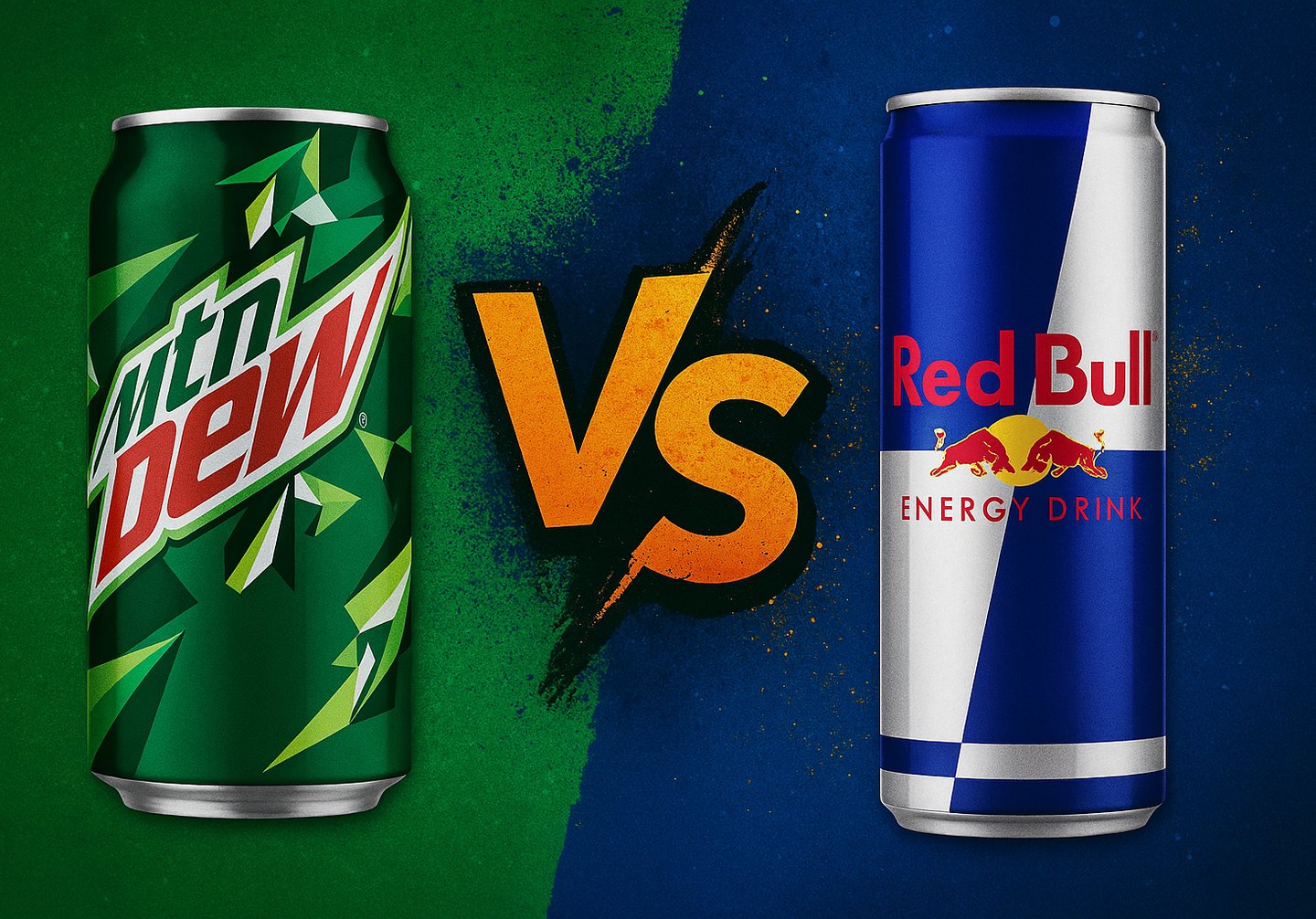
On paper, Red Bull and Mountain Dew share several functional similarities: sugar, caffeine, carbonation, and flavoring. Still, consumers consistently treat them as two completely different categories. Red Bull → Energy drink, performance enhancer, mental sharpness Mountain Dew → Soft drink, refreshment, taste-based enjoyment Despite being more expensive—and often less preferred in blind taste tests—Red Bull achieves much stronger loyalty, higher willingness to pay, and premium brand perception.
PRICE
Krishna
8/12/20233 min read
The case study integrates:
Behavioral Economics Analysis
Pricing heuristics
Category framing
Anchoring & value construction
Expectation effects
Identity-based consumption
Psychological Analysis
Motivational systems: arousal, reward, mastery
Memory encoding
Ritual behavior
Social proof & group belonging
Neuromarketing Analysis
Subconscious brand associations
Emotional arousal triggers
Packaging perception
Priming effects
Cognitive fluency (ease of processing)
This multi-disciplinary approach reveals why people willingly pay more for Red Bull, even though they may not articulate the reason consciously.
3. Key Findings
Finding 1: Red Bull owns a unique mental category; Mountain Dew doesn't.
The Brain Doesn't Compare Across Categories
Consumers do not compare Red Bull to soda.
They compare Red Bull to:
coffee
pre-workout drinks
energy boosters
performance aids
This changes the reference price.
The brain expects energy drinks to be more expensive.
Mountain Dew is put into the soft drink schema, where prices are lower and driven by quantity, taste, and refreshment—not performance.
Behavioral Economics Insight:
Category framing creates its own price logic.
Consumers will pay more for "energy" than "soda," even if the ingredients are similar.
Finding 2: Red Bull's Ritual Creates a Dopamine Loop
Red Bull has a certain ritual of consumption:
Small slim can
Crack the metal tab
Sharp, medicinal first sip
Expectation of quick alertness
Rituals create predictability, which then amplifies the brain's reward system.
Mountain Dew consumption is casual and unstructured—no ritual, no expectation cycle.
Psychology Insight:
Rituals strengthen habit formation and emotional anchoring, thus building loyalty and willingness to pay.
Finding 3: Packaging Triggers Fast, Subconscious Categorization
Red Bull's slim can says:
efficiency
speed
strength
Focus
premium positioning
Its minimalistic design with elements in silver and blue resembles pharmaceutical or performance products, which connote functional benefits.
Mountain Dew's bright colors and busy graphics activate:
youthfulness
sugar
fun
impulsivity
Useful for a soda brand, harmful in commanding a premium.
Neuromarketing Insight:
Packaging serves as a visual heuristic.
Consumers trust products that "look" functional to deliver performance.
Finding 4: Red Bull Makes You Feel Like You're Buying “Energy,” Not a Beverage
Humans don't buy products.
They buy psychological states.
The implied promise of Red Bull is psychological and about identity:
"I am alert."
"I am active."
"I am productive."
"I perform under pressure."
It sells self-improvement, not taste.
Mountain Dew sells flavor enjoyment, which doesn't warrant a premium.
Behavioral Economics Insight:
Consumers pay more for those products that reinforce identity, capability, or status.
Finding 5: Price Itself Becomes a Signal of Effectiveness
In behavioral economics, a higher price can create a placebo effect:
If it is expensive, it must work better.
When people think that Red Bull is enhancing their performance, they interpret sensations such as:
increased heart rate
alertness
Energy
as proof that it works.
Mountain Dew's lower price anchors it as a "fun cheap drink" rather than a functional tool.
Key Insight:
Price amplifies perceived functionality, particularly when the purpose is performance, rather than pleasure.
Finding 6: Red Bull's Brand Story Activates the Brain's Reward System
The brand ecosystem of Red Bull comprises:
extreme sports
risk-taking
physical mastery
breaking limits
record-breaking stunts (e.g., space jump)
The following stimuli elicit an emotional arousal in brain areas involved in:
adrenaline
aspiration
Heroism
excitement
challenge
This makes the brand a symbol of action, not just a drink.
Mountain Dew's story was fun and rebellious, but non-functional.
It doesn't promise performance but only entertainment.
Neuromarketing Insight:
Emotional arousal reinforces the encoding of memory and enhances brand value.
4. Why Consumers Pay More for Red Bull (Summary)
1. Category Framing
Red Bull = energy booster
Mountain Dew = soft drink
2. Perception of Functionality
Red Bull activates performance schemas; Mountain Dew activates taste schemas.
3. Ritual and Habit Loop
Red Bull produces consistent experiential cues.
4. Packaging as a Subconscious Signal
Slim can = functionality and focus.
5. Identity Reinforcement
Consumers buy the feeling of being more capable.
6. Price as a Quality Cue
A higher price increases perceived effectiveness.
7. Strong Emotional Branding
It associates itself with high-arousal sports and achievement.
Together, these mechanisms override price sensitivity.
5. Behavioral Economics Model: The Red Bull Premium Preference Loop
1. Brand Story → Priming: Performance Expectations
2. Packaging → Cognitive fluency (“this works”)
3. Ritual → Dopamine anticipation 4. Consumption → Interpreted as energy (placebo boost) 5. Identity → Reinforced self-image 6. Loyalty → Willingness to pay premium This loop explains why taste, ingredients, or price does not significantly influence preference. 6. Conclusion Consumers do not analyze beverages rationally. They rely upon subconscious category cues, emotional stories, visual heuristics, and identity-based decision-making. The difference between Red Bull and Mountain Dew is not chemical; it's psychological. Red Bull is selling energy, capability, and performance, which the brain values more than flavor or price. This case highlights one of the basic principles of behavior science: People don't buy what they say they buy. They buy what their brain believes will change their state.
4. Consumption → Interpreted as energy (placebo boost)
5.Identity → Reinforced self-image.
6.Loyalty → Willingness to pay premium.
This loop explains why taste, ingredients, or price do not significantly influence preference.
Conclusion:
Consumers don't evaluate beverages logically.
They rely on subconscious category cues, emotional stories, visual heuristics, and identity-based decision-making.
The difference between Red Bull and Mountain Dew is not chemical—it's psychological.
Red Bull sells energy, capability, and performance, which the brain values more than flavor or price.
This case demonstrates a foundational truth of behavior science:
People don’t buy what they say they buy.
They buy what their brain believes will change their state.
Contact
Reach out for insights or collaborations.
info@neuroresearch.in